
How to get rid of moss between pavers and keep it from coming back
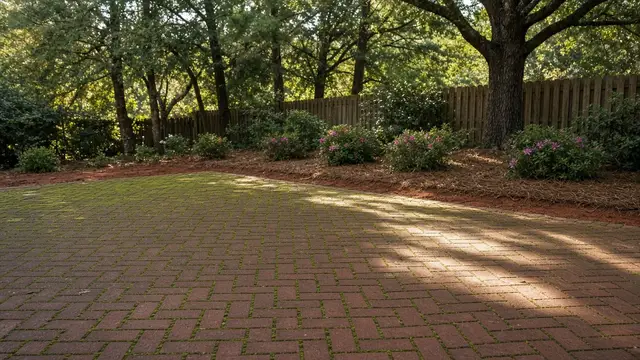
Moss grows between pavers when the surface stays shaded and damp and the joints hold dirt and moisture. To get rid of it, scrape or scrub the moss out of the joints and sweep it away. To keep it from coming back, let in more sun, keep the surface drier and make sure the joints are clean and full.
A moss killer can help in some spots, but some products stain pavers. This guide covers what to use, what to avoid and how to stop the cycle.
Why moss grows between pavers
Moss likes shade and moisture. Oregon State University Extension describes moist, shaded patios as ideal places for moss to grow.
Paver joints give moss an easy start. Over time, the joint sand washes out and dirt, leaves and grit settle into the gaps. That debris holds water after every rain, and the shaded edges of a patio may never fully dry out.
You will usually see moss first in these places:
-
Along the north side of the house or under trees
-
Next to walls, fences or planters that block the sun
-
In low spots where water sits after rain
-
Where sprinklers wet the pavers every day
-
In joints that have lost their sand and filled with dirt
Moss is more than a looks problem. Oregon State University Extension notes that moss on patios, decks and walkways can be slippery, and it advises removing moss from high-traffic areas.
How to remove moss between pavers by hand
Physical removal is the safest place to start. Oregon State University Extension recommends scraping or scrubbing, and notes that moss has no roots, so it lifts off fairly easily.
-
Scrape the joints. Use a dull blade, such as a putty knife, to lift the moss out of each joint. Oregon State University Extension suggests this tool.
-
Scrub the surface. Use a stiff bristle brush on the moss that spreads across the paver faces.
-
Rinse. Hose off the loosened moss and dirt.
-
Sweep it all up. Remove the debris so it does not settle back into the joints. Cornell University’s weed science program recommends regular sweeping to keep soil from building up in joints.
Dead moss comes off the same way as living moss, according to Oregon State University Extension. If you use a moss killer, you still have to remove the dead moss afterward.
Hand removal often loosens the joint sand along with the moss. Check the joints when you finish. If they look low or empty, they need to be refilled.
Moss killers: what works and what can stain
If scraping is not practical, a moss killer can help. Choose the product with care, because some types can damage the look of your patio.
| Product type | What the sources say | Caution for pavers |
|---|---|---|
| Moss-killing soaps (potassium or ammonium salts of fatty acids) | Oregon State University Extension says they are effective, biodegradable and non-corrosive | University of Alaska Fairbanks Extension says potassium-salt products do not stain concrete |
| Iron-based products (such as ferrous sulfate) | Common in lawn moss killers | University of Alaska Fairbanks Extension warns that iron stains concrete. Keep these off your pavers |
| Products with zinc or copper | Often sold for roofs | Oregon State University Extension says they are corrosive and may stain concrete |
Some rules apply to every moss killer:
-
Read the whole label, and use only a product whose label covers your surface.
-
Wear the protective gear the label lists. Oregon State University Extension notes that many moss products require goggles, and that glasses are not enough.
-
Keep children and pets away for as long as the label says.
-
Do not let the product run into storm drains or waterways. Oregon State University Extension warns that these products can harm wildlife.
-
Keep spray off nearby plants. If you hit one by accident, rinse it.
A moss killer is a short-term fix. Oregon State University Extension notes that moss killers do not provide long-term moss control. If nothing else changes, the moss comes back.
How to keep moss from coming back
Long-term control means changing the conditions that moss needs.
Let in more sun. Oregon State University Extension recommends removing or thinning overhanging branches and plants that shade the surface.
Keep the surface drier. Adjust sprinklers so they do not spray the pavers, and avoid soaking the patio when you water nearby plants. Oregon State University Extension gives this advice for moss on pavement.
Keep debris off the patio. Sweep or blow off leaves, pine needles and dirt regularly. Oregon State University Extension lists this as part of yearly maintenance.
Fix the joints. Joints that are full of fresh sand leave less room for dirt and moisture to collect. Our guide to weeds between pavers explains how clean, refilled joints help keep growth out, and when polymeric sand makes sense.
Consider a sealer. On the right surface, a sealer can help protect a cleaned patio. Read should I seal my pavers? before you decide.
When to call a professional
Scraping moss out of a small walkway is a reasonable weekend job. Consider professional help when:
-
Moss covers large areas of the patio or driveway.
-
It returns soon after every cleaning.
-
The joints are mostly empty or packed with dirt.
-
The surface is travertine or another natural stone, and you are not sure which products are safe for it.
-
Pavers have started to shift or sink.
What we do on a job like this
Restoration Hardscapes restores the pavers and stone you already have. We do not offer generic cleaning services. Moss between pavers is usually a sign of shade, moisture and worn-out joints, so we deal with the joints, not just the moss.
Through our paver cleaning and re-sanding service, we inspect the pavers, the joints and the base. We deep clean the surface, remove the organic growth and clear out the old joint material. Then we refill the joints with fresh sand so the pavers stay tight and moss has less room to take hold. Where it suits the surface, we recommend a sealer to help protect the result.
If your patio is natural stone, see our travertine and natural stone cleaning page. When you are ready, request a quote and tell us about your surface.
Common questions
Why does moss grow between my pavers?
Moss grows on surfaces that stay shaded and damp. Oregon State University Extension lists shaded patios as ideal for moss. Dirt and debris in the joints hold moisture, which helps it take hold.
What is the easiest way to remove moss from pavers?
Scrape or scrub it off. Oregon State University Extension suggests a dull blade such as a putty knife and a stiff bristle brush. Moss has no roots, so it lifts off fairly easily.
Will moss killer stain my pavers?
Some can. University of Alaska Fairbanks Extension warns that iron-based moss products stain concrete. Oregon State University Extension says products with zinc or copper may also stain concrete. Check the label and keep these off your pavers.
Do moss killers stop moss from coming back?
Not on their own. Oregon State University Extension notes that moss killers do not provide long-term control. Long-term control means more sun, less moisture and clean joints.
Is moss on pavers dangerous?
It can be. Oregon State University Extension notes that moss on patios, decks and walkways can be slippery and advises removing it from high-traffic areas.
Sources
- Oregon State University Extension, Moss on Roofs and Walkways (Solve Pest Problems)
- Oregon State University Extension, How can I get rid of the moss on my pavement?
- University of Alaska Fairbanks Cooperative Extension Service, Moss Control in Lawns (HGA-00133)
- Cornell University, Turfgrass and Landscape Weed ID, Hard Surfaces
Keep reading
Your hardscape is worth restoring
Tell us about your patio, driveway, walkway or pool deck. We will arrange a look and give you a quote.